

Mary Meo, public high school teacher for over 20 years, has long had a vision of community theatre as a form of Catholic outreach. In 2008, Meo incorporated a community theatre, the Clinton Area Stage Troupe (CAST) in Clinton, New Jersey.
As opposed to a parish-based theatre group, Meo wanted to start a “secular” community group, albeit one that would provide enriching productions. “I just felt called to do it in the community. I felt the community needed this.”
CAST began on a shoestring. A friend’s husband drew up the initial incorporation documents pro bono. The first production, The Miracle Worker, was mounted for $1500, including $700 for script rights.
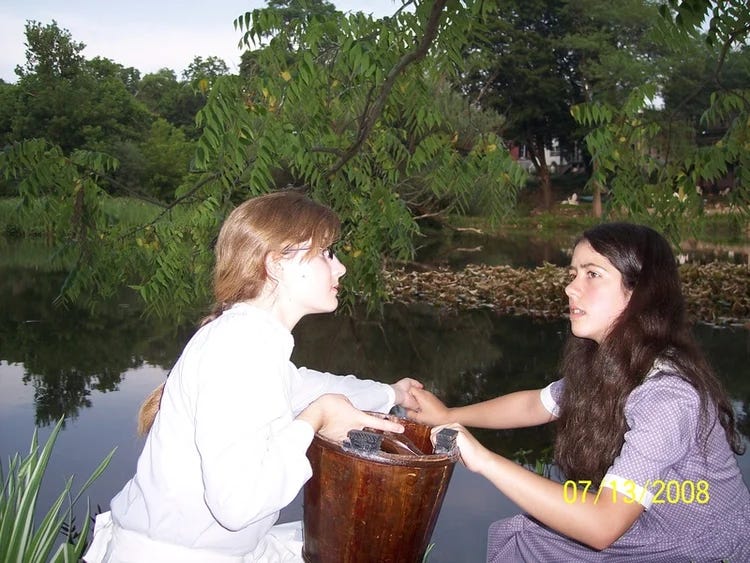
The cast rehearsed in each other’s homes. For tech rehearsals, Meo arranged for discounted space in the local fire department. The eventual production used community space that was, at that time, free. The cast scrambled to create their own costumes.
Meo was strategic in selecting material that would build an audience. She programmed choral singing between scenes of The Miracle Worker. “You get that many people involved, they tell their friends,” she explains.
In its second year CAST mounted, Annie Get Your Gun! with a cast of upwards of 50. Over 800 people attended two performances.
“We took anybody that wanted to be in, and they all told their friends, and we filled the theatre twice,” Meo laughs.
In fact, for the first twelve years of CAST’s existence, the theatre turned a small profit each year. Covid-related closures in the early 2020’s were a speed bump. To keep at least some momentum going, Meo bought scripts and actors read them aloud through Zoom calls.
CAST returned to regular programming in 2022 and in 2024, the production of Joseph and the Amazing Technicolor Dreamcoat, by Andrew Lloyd Webber and Tim Rice was a big hit. “People flocked to the shows. We had so much fun, and we filled our bank account,” Meo says.
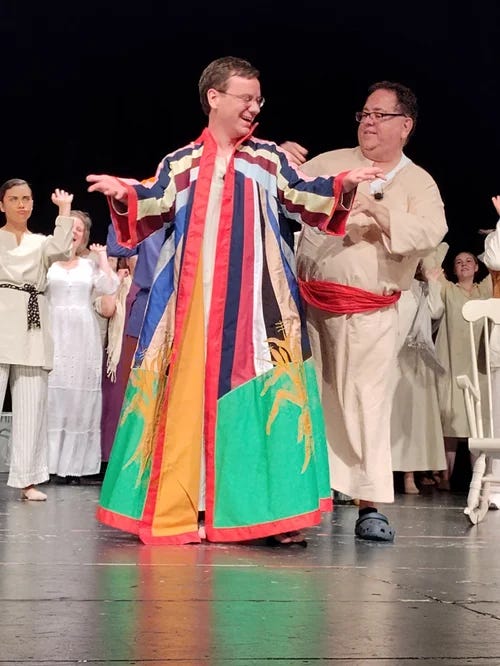
Meo has a clear sense of the arts, specifically theatre, as a vocation. “It’s absolutely a calling. My artsy side was pushing me to do it most. I like to be doing community theatre and involved in artistic endeavor.”
A critical piece of this vocation is supporting creative people in the exercise of their talents. “Quietly or inconspicuously, we’re giving artists work that is free from temptation and full of inspiration and we’re evangelizing in that way. To go out in the community and work with artists in the community and help them bring positive messages, real messages about charity, humility, selflessness, generosity, doing the Lord’s work in a place where you might not necessarily see it.”
Meo’s success in getting the company off the group reflects her savvy, perseverance, and the local network she had built over the years as a teacher. Her perseverance has shown that there’s lots of talent in local communities and there are also audiences ready to appreciate that talent.
A commitment to excellence must be part of any theatrical company’s ethos. “You have to put on a quality production,” Meo cautions. “You have to rehearse often to put on a really good show.”
Now that she’s retired from public school teaching Meo is looking for ways to expand, such as putting on more shows. She anticipates sticking to CAST’s original mission statement of uplifting and inspiring quality theatrical productions.
“Whatever I do, it would have to be pleasing to the Lord,” Meo summarizes. “He’s the One I have to please, the One it comes from. Put God in the center of that because we’re in the image of God.”
Curtain Call Q & A
What are your thoughts about this post?
What changes when creative work is treated as a true vocation?
How can community theatre serve as outreach beyond traditional parish settings?
Other thoughts?
What a great idea and what a great article Judith! That would make a great model for others to think about starting. Let’s have a revolution for Christ ❤️