

One year out of the Catholic University of America’s theatre program, Anna Sheehan is pounding the pavement in New York City, making her way as a professional actor.
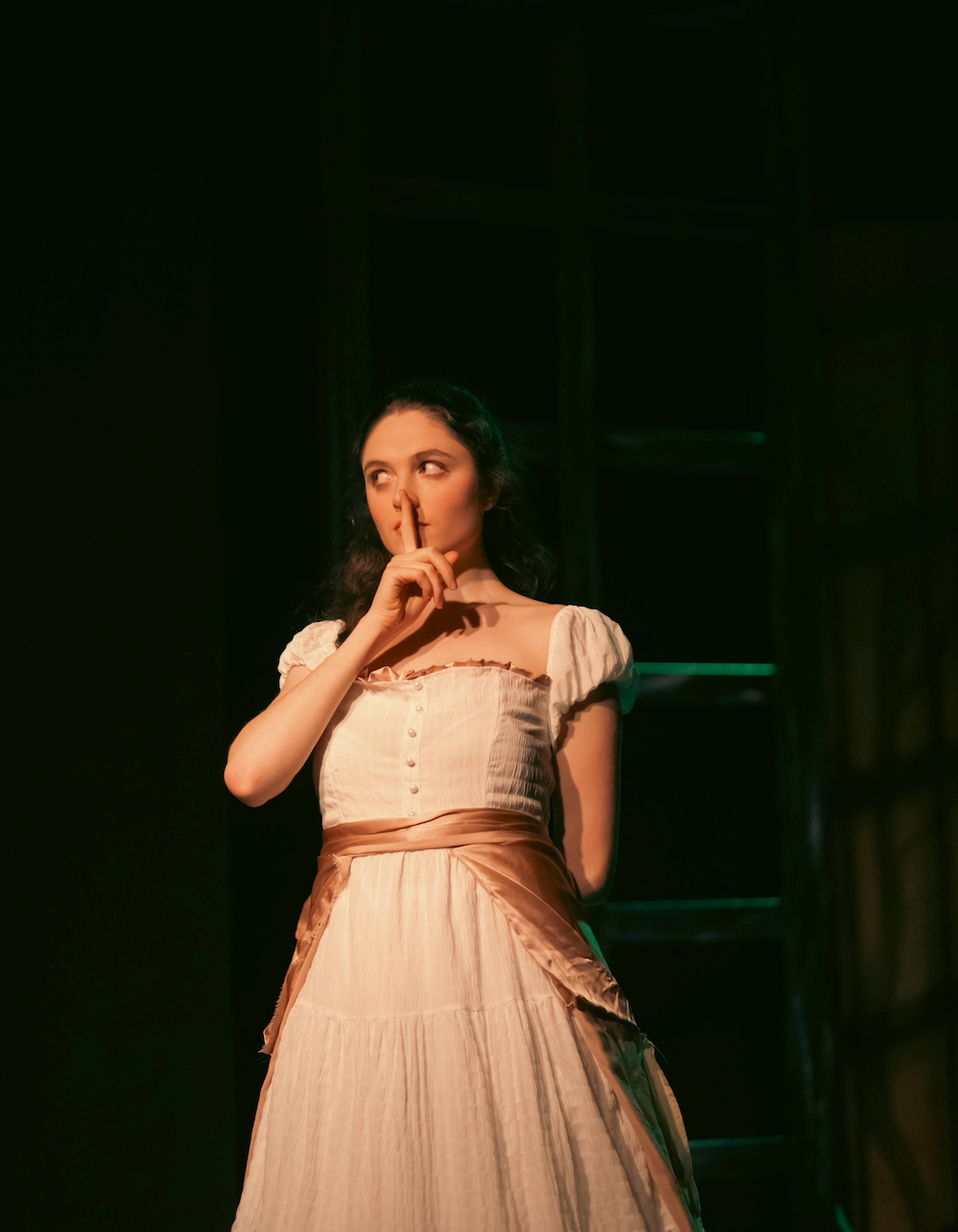
In her first year in New York, Sheehan played Katrina in The Legend of Sleepy Hollow with the Staten Island Shakespearean Theatre.

In December, 2025, Anna became an Elf named Sugarplum on the North Pole Express—performing on an open top bus and giving tours of Midtown.

“I had an elf backstory and sang and danced. It was a 75-minute musical, a script with a lot of improv. Kids really thought I was an elf,” she laughs.

The contrast of the sophisticated and the antic isn’t new to Sheehan. Her two favorite classes at CUA were Shakespeare and clowning. She believes the two share this virtue: both are honest about emotions and reactions to things and vulnerable about them, Shakespeare through elevated language, the clown through actions.
Sheehan says that clown class made her a better actor. “I got much better at living in the moment and just letting myself be sad about something or letting myself be happy about something and not be embarrassed about showing that.”
That theatre embraces such a wide variety of human experience, cultivates empathy both in the performer and the audience. “The more that we listen to other people’s stories and experience other people’s lives through those stories, it’s just how we understand other people better,” Sheehan says.
She believes understanding makes it easier for us to be charitable with others and the arts help to expand our understanding. “We know we’re not supposed to judge, we’re to love unconditionally. We can do that better when we understand where someone is coming from. The arts can train us to see differently.”
Sheehan had a notable experience with this when she played the role of Shelby in CUA’s 2024 production of John Proctor is the Villain. She didn’t share many qualities with the character, which she describes as an “angsty teen.”
“Of all the roles I’ve ever played, that was probably the most different from me. I felt the most like I was acting in the sense of, ‘this isn’t me.’ I’m really trying to understand someone else’s circumstances and would never made these decisions but here I am understanding how this girl made these decisions and totally empathizing with it.”
The emotional connection the arts provide can be a channel for transformation. “Through the arts we’re training our understanding and our intellect and how we see the world but also our will. When there’s an emotional connection, we start to actually want to do something, change how we approach other people.”
In the contemporary world of screens and AI, live performance brings something so vital to us, it’s like spiritual oxygen. Sheehan compares live performance with people on a subway. Both the theatre and the subway car have people in the same space. But live performance has everyone present mentally as well as physically. It forces us to put down our phones and all direct our attention to the same thing.
“Theatre provides stimulation and entertainment, but you need to be present,” Sheehan observes. “It’s okay not to be available to the rest of the world for two hours.”
God gave us our imaginations that can range from the sublime to the ridiculous and developing it is part of His plan, in Sheehan’s view. “It’s just a great way of expressing the gifts that God has given us. He’s a father who’s given his child this amazing toy, which is imagination. He says, ‘go play with it.’ He really gives us the toys that are good for us. ‘I gave you an imagination, have fun with it, enjoy it, share it with other people.’ That’s what the arts can be too – a way of sharing this gift that God has given us.”
Curtain Call Q & A
What are your thoughts about this post?
Has a performance, story, or work of art ever changed how you see another person or situation? How?
When have you experienced a moment of deep presence—whether in theatre or elsewhere—and what made it possible?
Sheehan frames imagination as a gift from God meant to be used and shared. How does this perspective shape the purpose of art?