

If a culture is the result of wildly different people all trying to understand ourselves and each other, then playing two different roles, the villain and a friend of the hero, crystallizes the conflict.
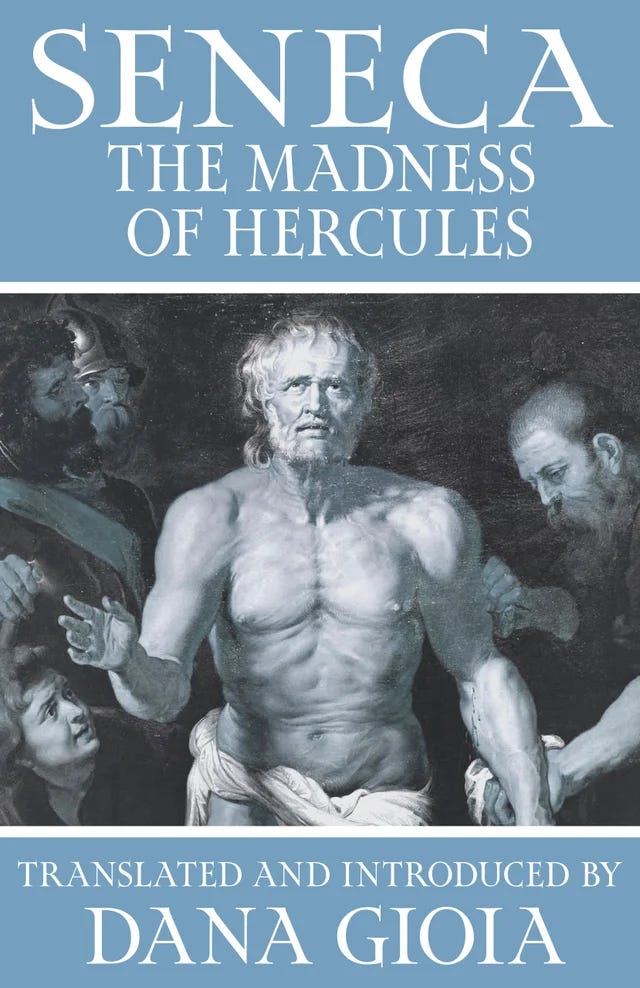
For Joseph Bissex, portraying Lycus, the villain, and Theseus, a loyal friend of the hero, in Dana Gioia’s translation of Seneca’s 1st century tragedy, The Madness of Hercules, was a memorable opportunity.
“They’re very different people and that made it fun,” says Bissex, who was part of the performance staged by Ruth Pe Palileo and Patrick Gallagher at the Benedict XVI Institute’s 2025 Artists’ Retreat in Menlo Park, California. “I needed to take different tones and find different body language to help the audience hear a different person.”
It’s an example of Bissex’s ongoing vocation as actor, director, and teacher, to promote the role of art and culture in making sense of our lives.
“We’re trying to understand our lives as human beings, right?” says Bissex, who teaches English, Drama, and Latin at The Heights School, a private school for boys in Potomoc, Maryland. “We’re trying to be better at something because we’re looking for something. We’re trying to learn or accept and all of these are ways of understanding.”
Art deploys our imaginative abilities to gain understanding. “We can see better if we get out of our own heads, thinking the way other people think or seeing the way other people see the world,” Bissex notes. “We’re not able to do that, it’s not physically possible, but it is imaginatively possible. That’s why we read books.”
Theatre has the further power to bring what’s in our heads onto a shared stage. “Theatre takes it a step beyond books and actually incarnates it in us,” Bissex explains. “We have to then take it into our bodies and make sounds with our voices that mean something the way a different person would say them. They take on more of a reality because there is a body and a voice there speaking and moving.”
Since it’s a universal human experience, that means it can and should be experienced at the grass roots level, in schools and homes.
As a teacher, Bissex has discovered that the grass roots have plenty of talent. As part of the school curriculum, the students at The Heights have the opportunity to act, direct, and compose. “It’s just amazing what the students come up with,” Bissex enthuses. “They’ve already got the gifts. You’ve just got to allow them to let it out.”
Bissex does just that. Recently, he wrote a play, Sons of Ithaca, that’s a take on the Odyssey.
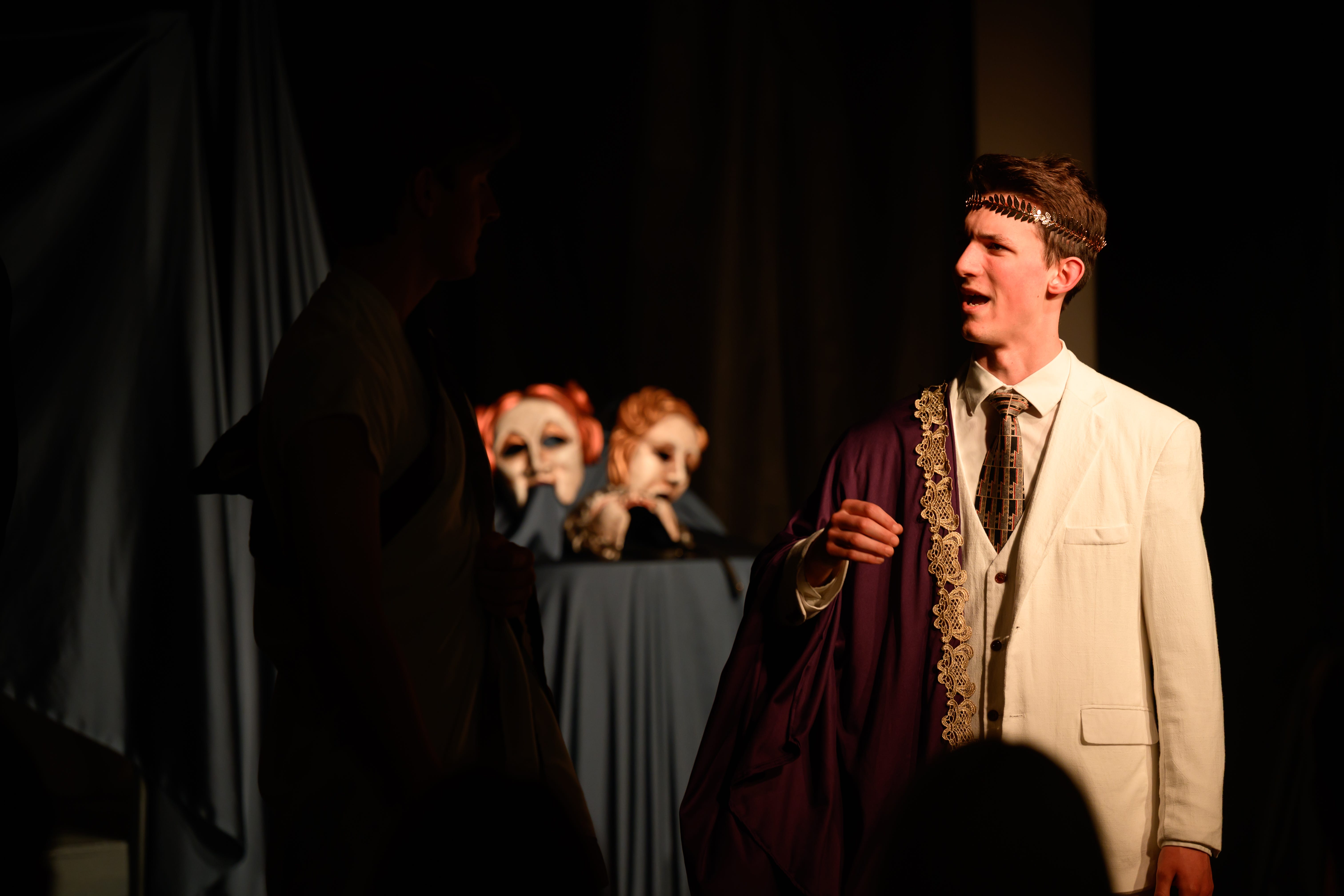
In addition to the student cast, one student, Charles Jackson, composed a score for the play:
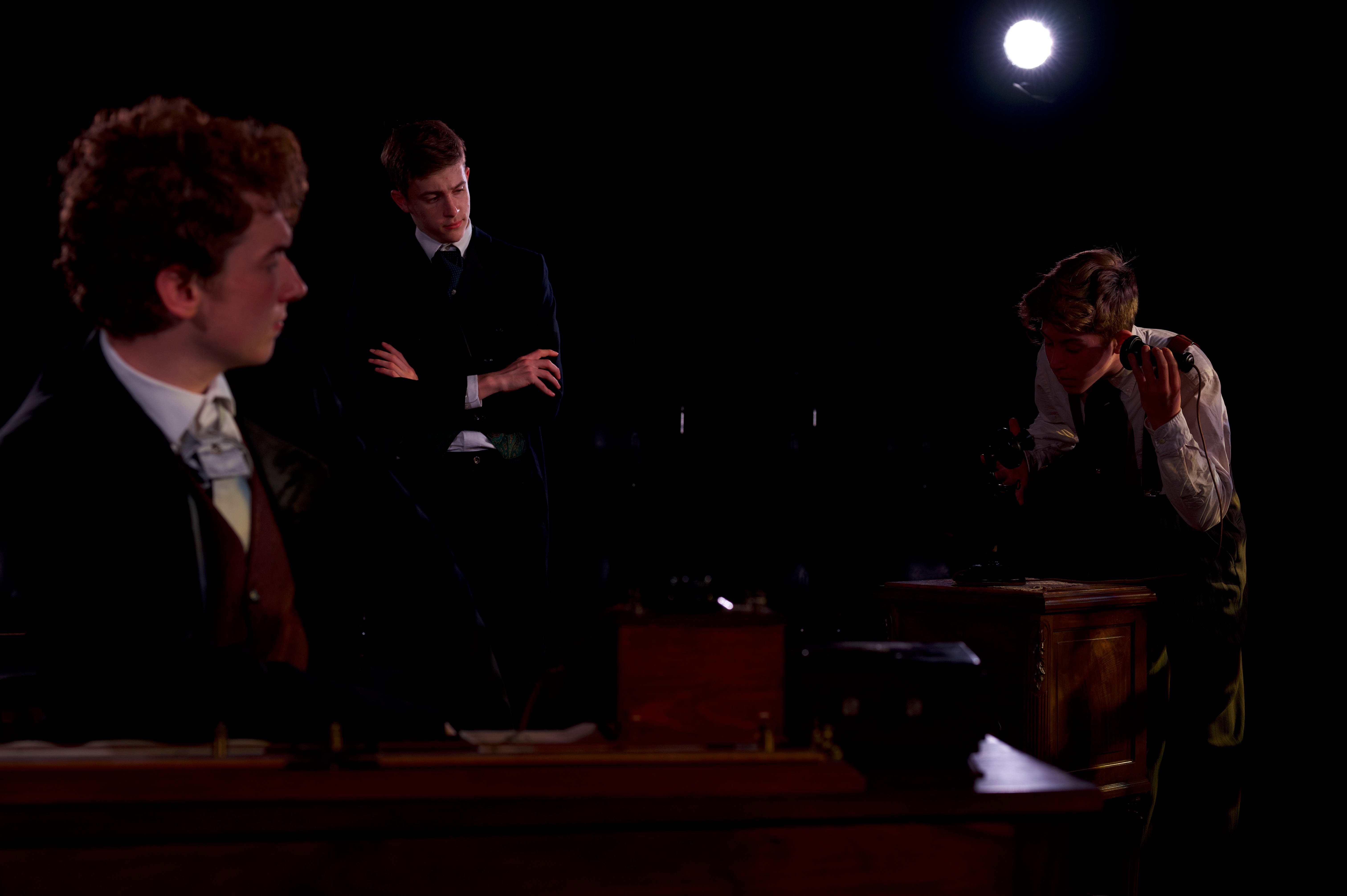
In 2022, the department devoted its entire season to student-written plays. Two of the plays Bissex rates as “some of the best shows we’ve done.” One, by Michael Kish, titled Meprises, was about Napoleon:

Another, titled Graham, by Joaquin Bucheli, was about Alexander Graham Bell:
Bissex acknowledges that creating art at a grass roots level comes with challenges, whether budgetary or identifying plays that are appropriate and appealing to a mixed audience.
“You can think of those things as insurmountable obstacles, but you can also think about it as a creative challenge,” he insists. “How can I take this and make it an amazing experience? What do I need to do as a creator, as an artist to really bring this alive for participants?”
Not content with just directing during the school year, this past summer, Bissex directed high school students in productions of Shakespeare’s Cymbeline and Pericles.
The productions, aimed at a family audience, were put on in a colleague’s back yard and the evenings become an event where families can socialize. “The goal is to have a grass roots culture,” he concludes. “To create a community that thrives on great works.”
Curtain Call Q & A
What are your thoughts about this post?
What might a community that “thrives on great works” look like? What roles can schools, families, and churches play in creating one?
Bissex describes practical limitations as “creative challenges.” How does that framing change how we approach obstacles, either in making art or in other areas of life?
What can grassroots theatre offer that large productions cannot?