

You know you’re on track to becoming a Catholic artist when, as a teen-ager, you’re inspired to seek baptism after reading Les Miserables, the novel, and then listening to the soundtrack of the musical.
That’s Brother Christian’s story, neé Christian Cole Matson, who became a diocesan hermit in the diocese of Lexington, Kentucky, in 2021. In a lengthy and productive career, Brother Christian has earned multiple degrees in theatre and theology, has acted on stage and in films, and run theatre companies.
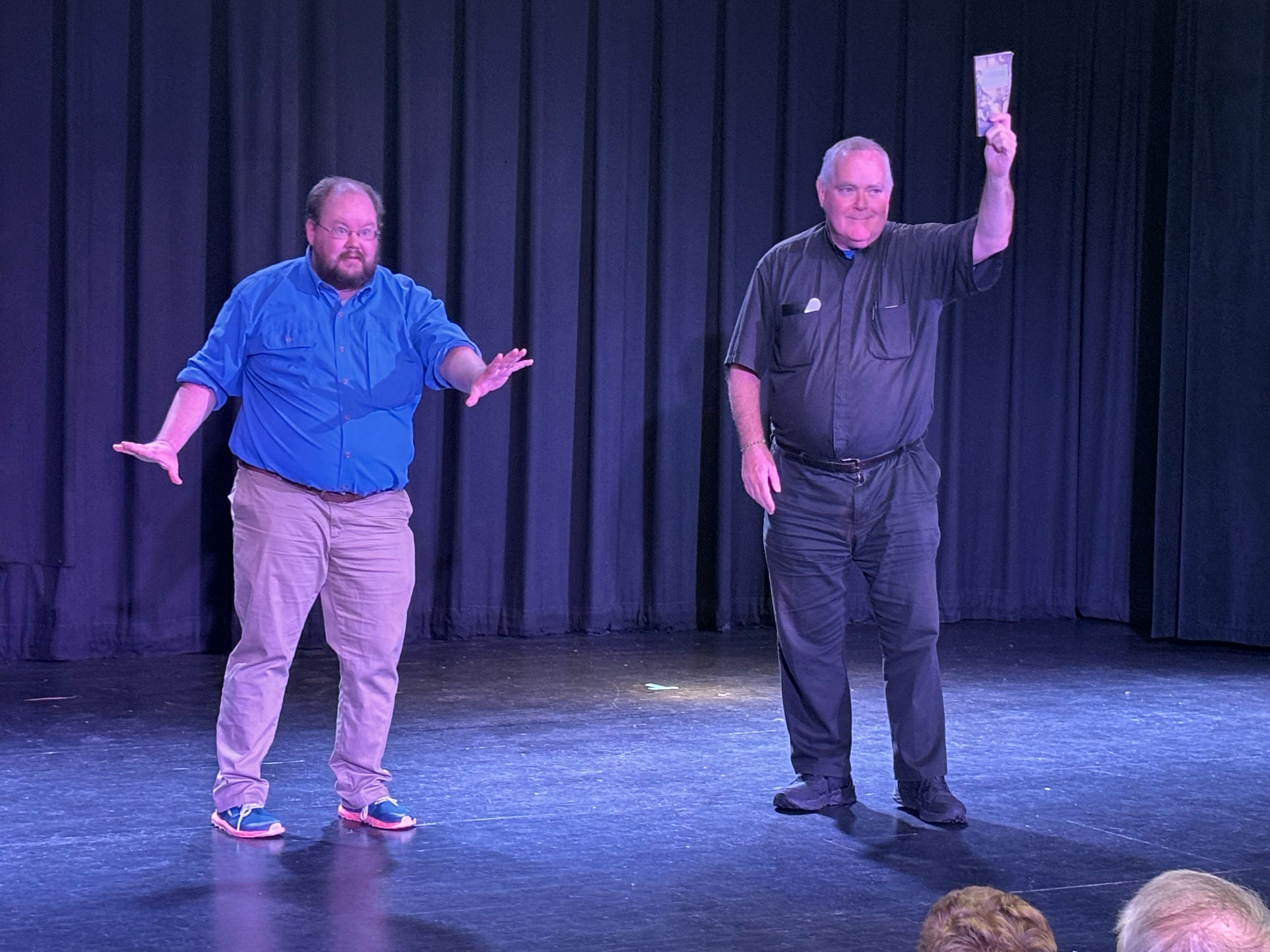
Brother Christian’s passion and calling is for theatre that lives at the intersection of questions of faith and excellent drama. His vocation underwent an early trial by fire. In his first year acting class at NYU a professor stated that the Church is responsible for all evil in the world (!). That’s a lot of responsibility, but on the plus side, it makes evil a very simple problem to solve.
Another NYU teacher stated that a person can’t be both religious and an artist because religion is about imposing rules and art is about breaking rules.
Brother Christian persevered in the face of such cartoonishly reductive views and maintains that most or at least many secular theatre professionals can be open to dramatic works that deal seriously with questions of faith. He thinks the secular world primarily expects drama to acknowledge that religious questions are difficult, that wrestling with them is hard, and that people have been wounded by being pressed to soon into “pat” answers.
Brother Christian urges Catholic artists to respect honest questions. “Leave room for the people that are really wrestling. I’m not saying no answer to the Church is wrong. But people are trying to explore their own experience.”
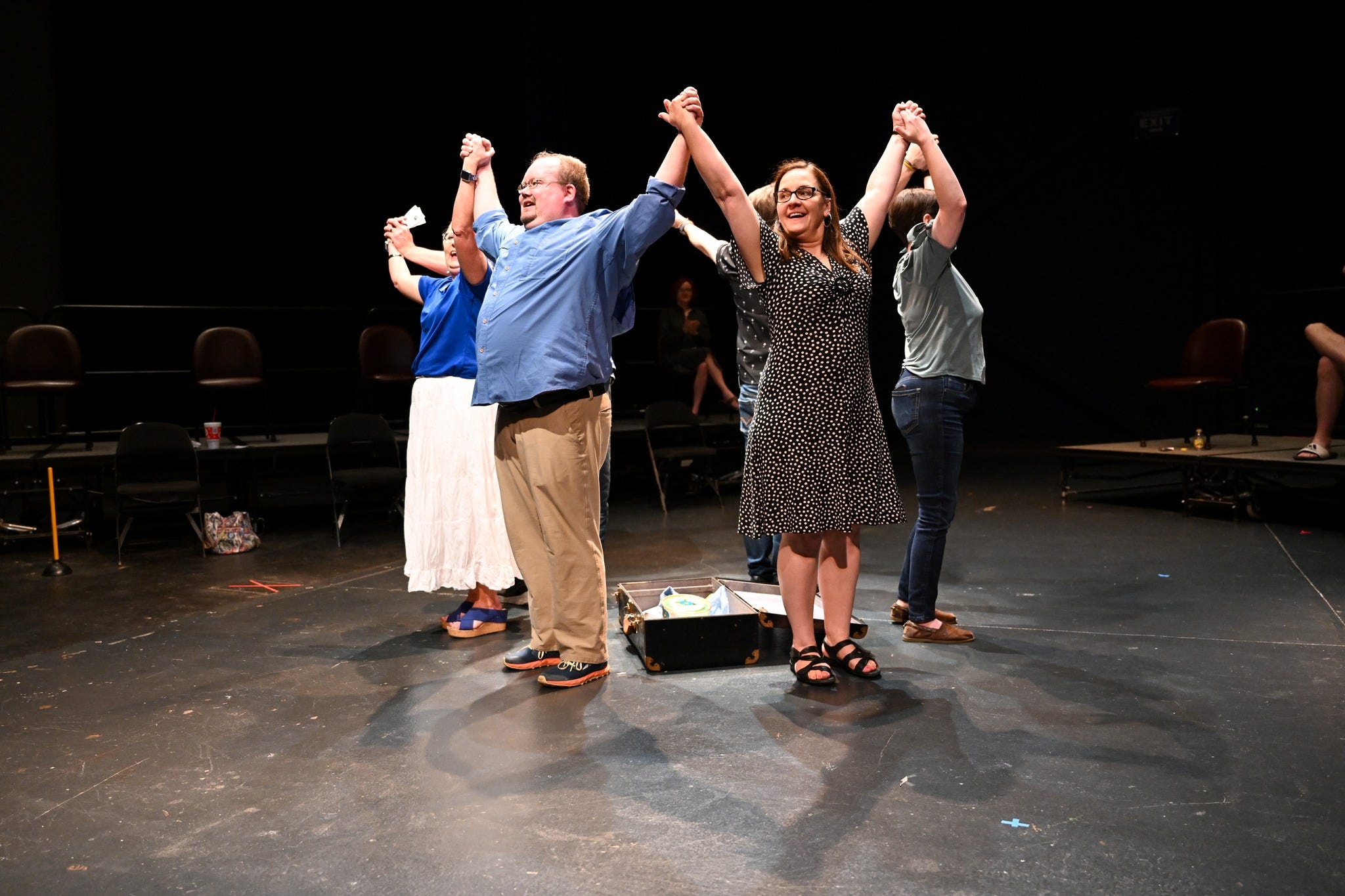
This isn’t an argument for either moral relativism or nihilism. “If the end result is saying, ‘There is no truth, there is no ‘there’ there,’ that’s not helpful either,” Brother Christian reflects. “Even if you’re not there yet or can’t gasp all of the mystery, the mystery is a thing which exists, not a nothingness. We want to find God, not an empty space.”
The Catholic faith, Brother Christian finds, is well-suited to such a mission. “It’s a richly complex form of Christianity. We can say, ‘here’s the wisdom of two millennia. I can help you find the right questions to ask God or help you ask those questions of God directly through a story.’”
Brother Christian especially admires the “wrestling” of Stephen Adly Guirgis, a contemporary, Pulitzer-prize playwright. Guirgis, raised in the Catholic faith and educated in Jesuit schools, does not define himself as a “Christian playwright” but often writes plays that deal with religious questions.
For example, Guirgis’ play, The Last Days of Judas Iscariot, imagines Judas going on trial in hell. Jesus appears in hell to wash Judas’ feet. Christ offers forgiveness but Judas refuses it and stays damned. Judas can’t accept a reality where he fell but could be forgiven. He wants a world where he had been created “good enough” for God’s love.
“It’s a very profound play, richly theological,” Brother Christian says. “Guirgis is working out deep questions within the Catholic tradition.”
Supporting other Catholic and Christian artists is a cornerstone of Brother Christian’s vocation. He served as founding Executive Director of Catholic Artist Connection, whose mission is to connect and support Catholic artists of all disciplines.
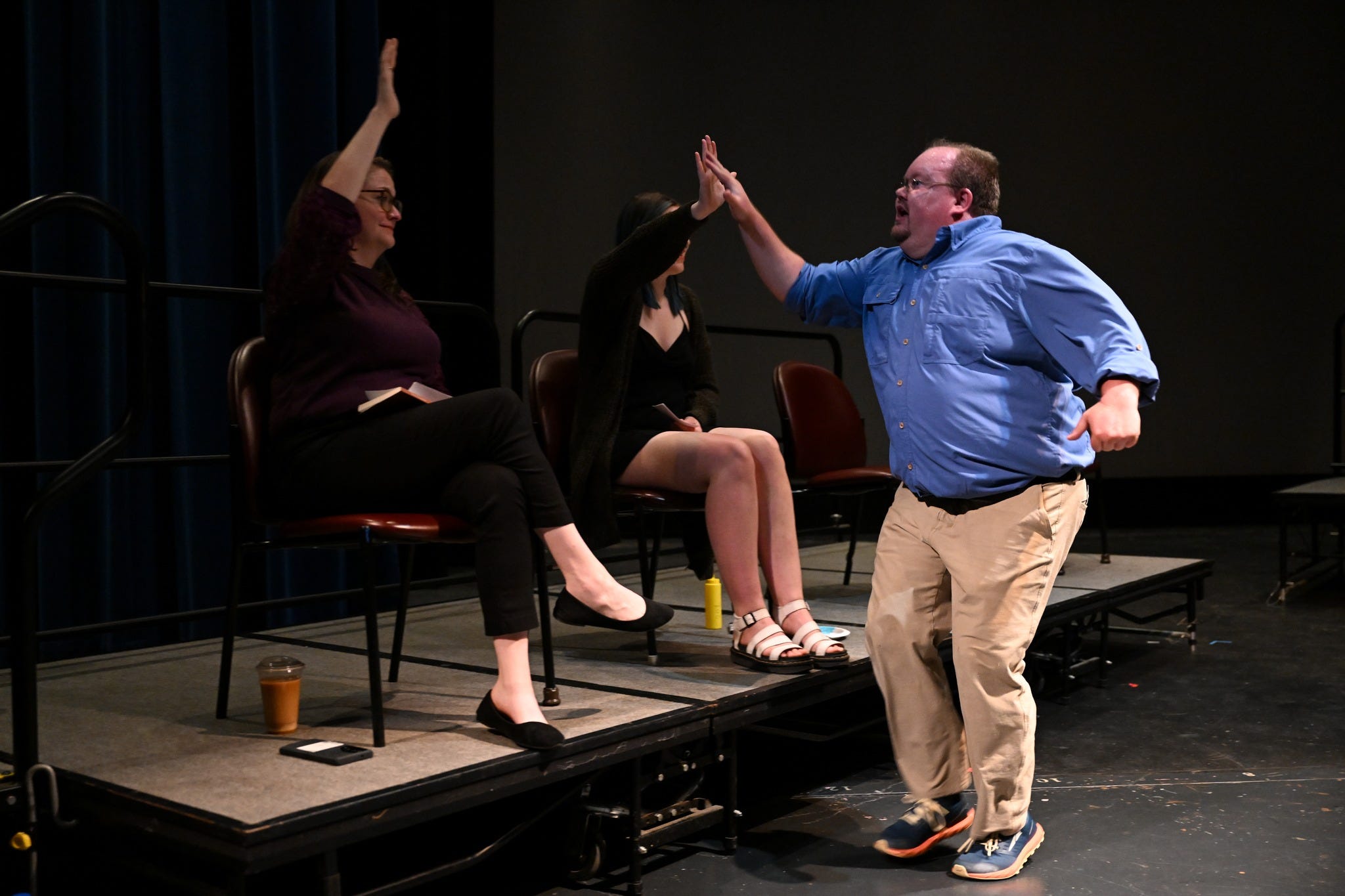
He periodically publishes The Flannery List, a list of plays that deal with religious questions or themes. He solicits suggestions for plays from 75+ theatre professionals. Any suggested play is included in a “long list.” Plays that receive three or more nominations comprise a short list.
Brother Christian continues active stage involvement through his theatre company, Earendel Theatricals. As of this writing, Brother Christian is directing The Courtroom, a play created from verbatim transcripts about the deportation trial of a Filipina immigrant. The play will be performed at the Cathedral of Christ the King in Lexington, Kentucky. As of this writing, winter storm Fern has put performance dates in limbo, but if you’re in the area, check here for updates.
Brother Christian also regularly tours the one-man play, Every Brilliant Thing, for suicide prevention programs at local schools and universities.
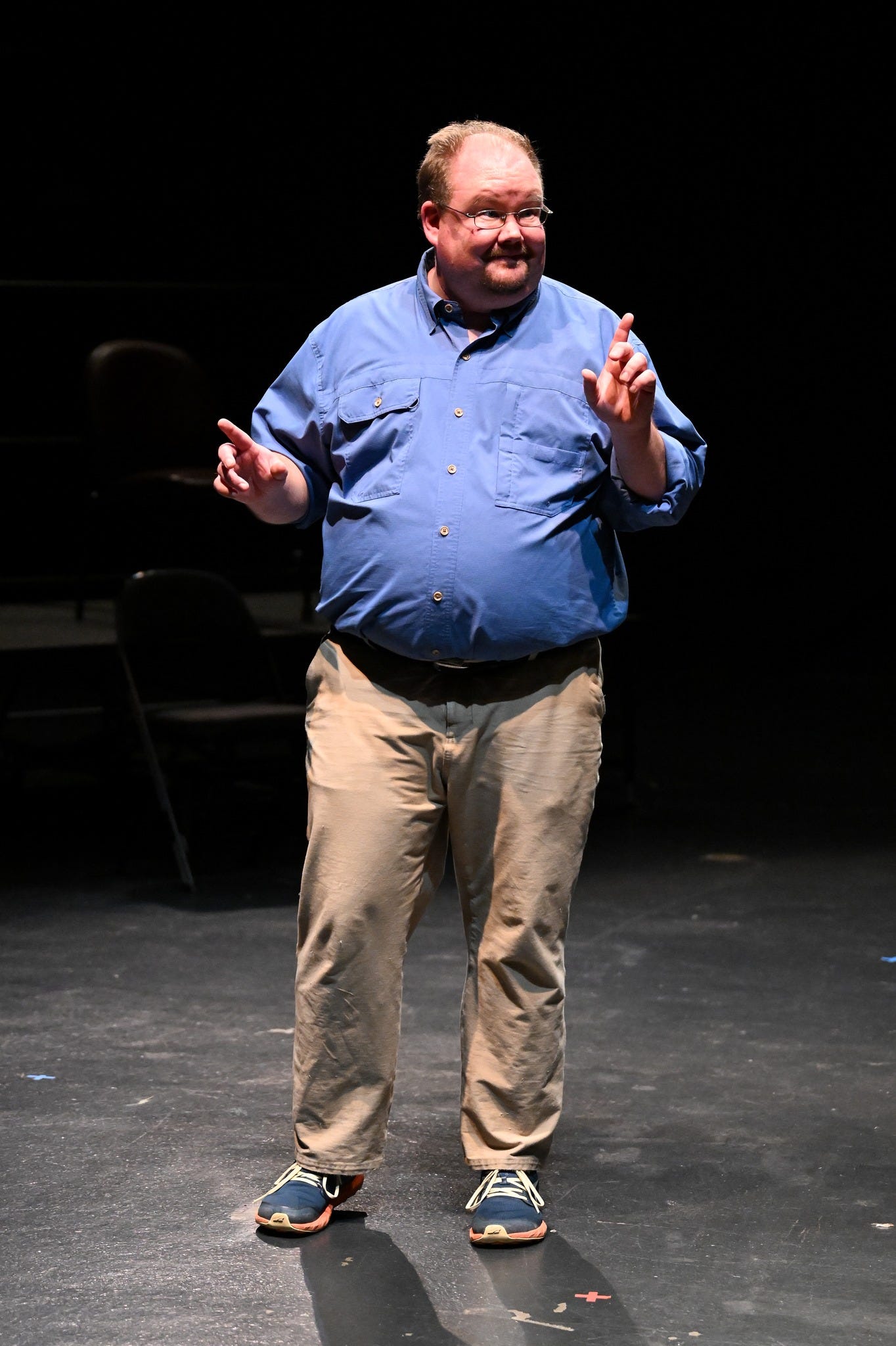
Fundamentally, Brother Christian believes there’s room for plays which are more didactic or evangelizing as well as theatre which engages with difficult questions of faith.
“The artist needs to see themselves as on the same level as the audience, not ‘I’m the all-seeing artist telling you bourgeois sheeple how you’re wrong and what you need to do,’” he laughs. “We’re all fallen, striving to find the truth. Offer your work with humility,” he concludes. “Here’s the vision that’s been given to me of what I believe to be good, true and beautiful.”
Curtain Call Q & A
What are your thoughts about this post?
What is a religious approach to life about besides “imposing rules”?
Is the statement “art is about breaking rules” a sufficient aesthetics?
What does it mean to say that mystery is “a thing which exists, not a nothingness”?